How WNE Digitalized a 20-Story High-Rise with LoRaWAN® Smart Metering
Quick Facts
Company
WNE Solutions
Customer Profile
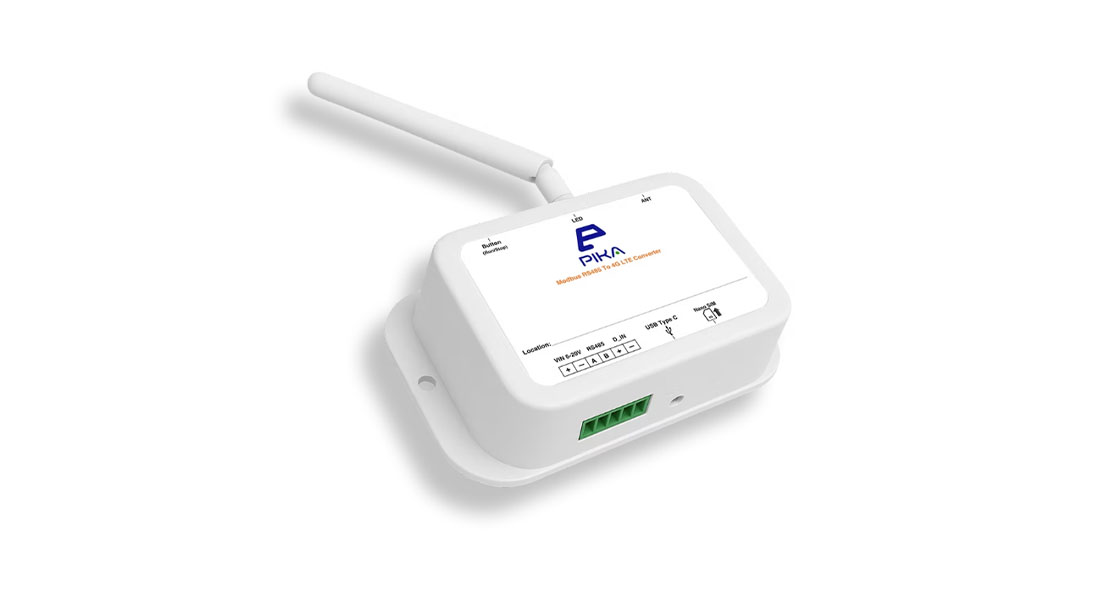
WNE is a solution vendor, system integrator and IoT device manufacturer based in Singapore and Vietnam. Its flagship product, PIKA, is a universal IoT bridge that connects utility meters of different models and protocols to digital platforms. With a portfolio of PIKA models built for outdoor meter reading, indoor monitoring and environmental data collection, WNE delivers end-to-end smart utility solutions for residential, commercial and industrial environments across Southeast Asia.
Objectives
Results
- 99.9% data transmission success rate across 315 utility endpoints
- 90% reduction in manual workload across the meter-to-invoice workflow
- 100% data accuracy in tenant utility allocation and billing
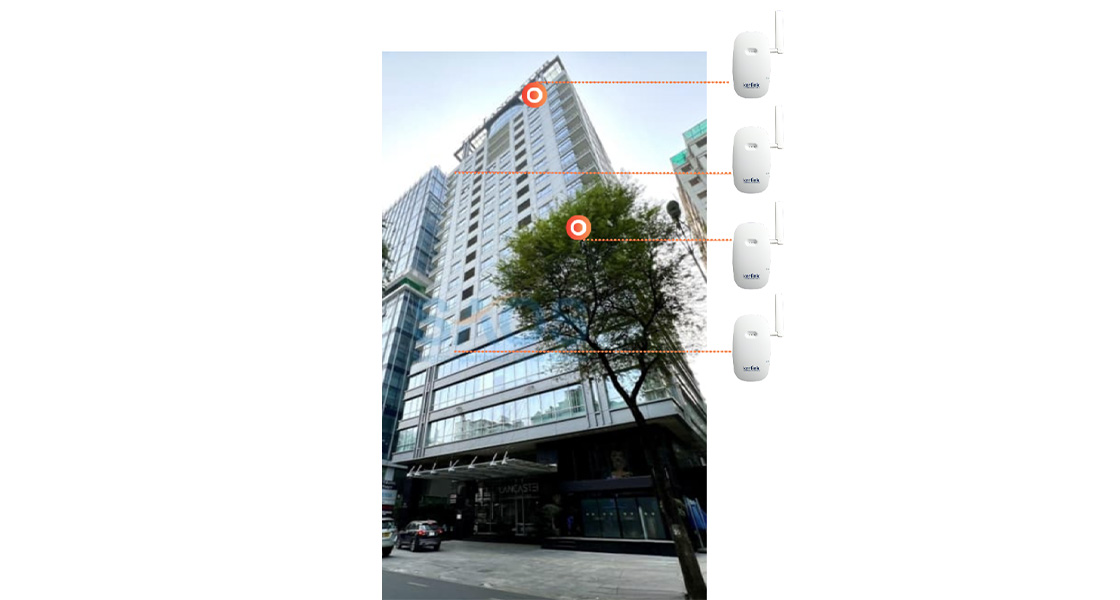
- Complete coverage of a 20-story concrete high-rise using only four LoRaWAN® indoor gateways and 30 PIKA bridges
- Real-time alerts for leakage events and “Meter Index Unchanged” anomalies
- Quick ROI driven by minimal hardware footprint and rapid deployment
Products & Services
Introduction
WNE, a Singapore- and Vietnam-based IoT integrator, deployed a smart metering solution using LoRaWAN at Lancaster Serviced Apartments in Ho Chi Minh City, achieving 99.9% data reliability across 315 utility endpoints with just four indoor gateways. Lancaster Serviced Apartments, built in 2007 and spanning 22,000 square meters across 20 floors and a basement, is one of Ho Chi Minh City’s premium highrise residential properties. With more than 150 serviced units, building management faced a challenge familiar to operators of dense vertical properties: manually reading and reconciling hundreds of water and electricity meters every billing cycle, with limited visibility into consumption between cycles.
To modernize the property’s utility operations, building management partnered with WNE to deploy a complete smart metering and billing solution built around its PIKA IoT Universal Bridge, powered by LoRaWAN technology.
Challenge
Digitalizing 315 Meters Across 20 Floors Without Disruption
Lancaster Serviced Apartments needed a comprehensive digital transformation of its utility metering infrastructure that would address several interrelated requirements:
- Retrofit without disruption:
Approximately 315 water and electricity meters across 20 floors had to be transitioned to a digital monitoring system—without structural modification to the building or interruption to residents. - End-to-end visibility:
Building management required real-time analytics covering both macro-level building consumption patterns and granular, unit-level usage to support energy efficiency and operational decision-making. - Automated billing:
The client required a more streamlined billing process that could generate invoices directly from meter readings, replacing the existing workflow of on-site meter collection and manual invoice preparation. - Reliable wireless coverage:
Penetrating a 20-story reinforced concrete high-rise with reliable wireless connectivity is a known challenge; cellular and short-range RF technologies present coverage, cost or scalability limitations in dense vertical buildings.
LoRaWAN’s deep indoor coverage and PIKA’s plug-and-play retrofit allowed us to digitalize an entire 20-story building without disrupting a single resident.
Solution
LoRaWAN Retrofit with PIKA IoT Universal Bridge
After comparing available wireless connectivity options, WNE selected LoRaWAN as the foundation for its solution—based on the technology’s deep indoor penetration, low power consumption, scalability and cost efficiency. Working with Lancaster, WNE deployed an end-to-end smart metering and billing solution combining its own PIKA IoT Universal Bridge, smart water meters, a private LoRaWAN network and an integrated meter data management platform.
- Plug-and-play retrofit with PIKA:
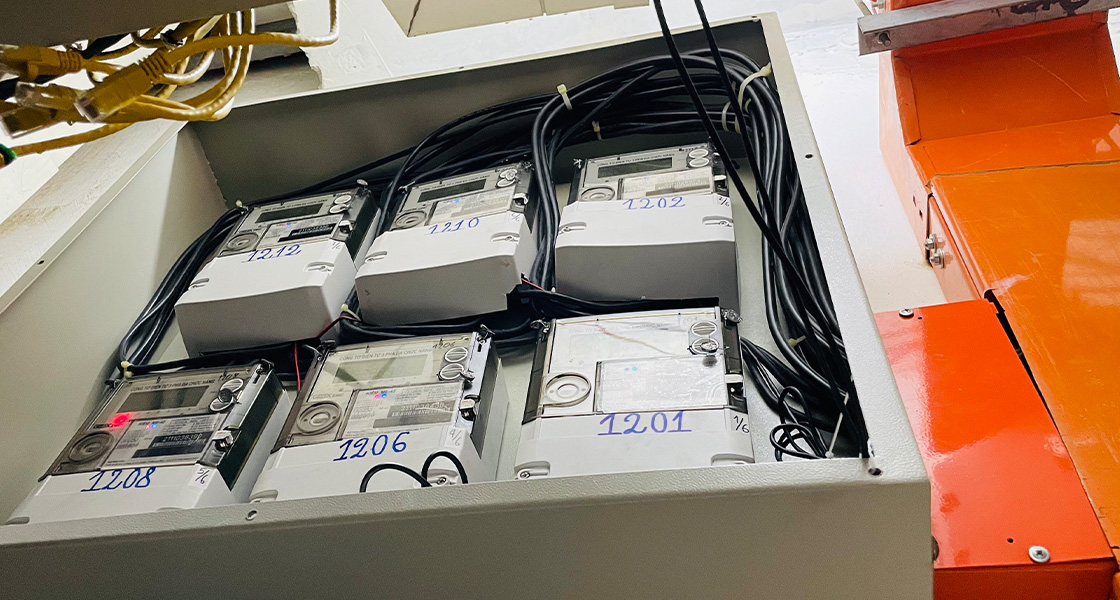
WNE deployed just 30 units of its PIKA IoT Universal Bridge, wiring them to more than 150 existing electricity meters to digitalize them in place—no meter replacement required. WNE also installed smart water meters in place of the building’s legacy water meters, completing the transition to a fully digital metering environment. - Streamlined LoRaWAN® infrastructure:
Leveraging the deep indoor penetration of LoRa® technology, WNE built a 100% local, private LoRaWAN network covering the entire 20-story concrete complex with only four indoor gateways— significantly reducing both deployment time and hardware costs versus alternative connectivity approaches. - Intelligent platform integration:
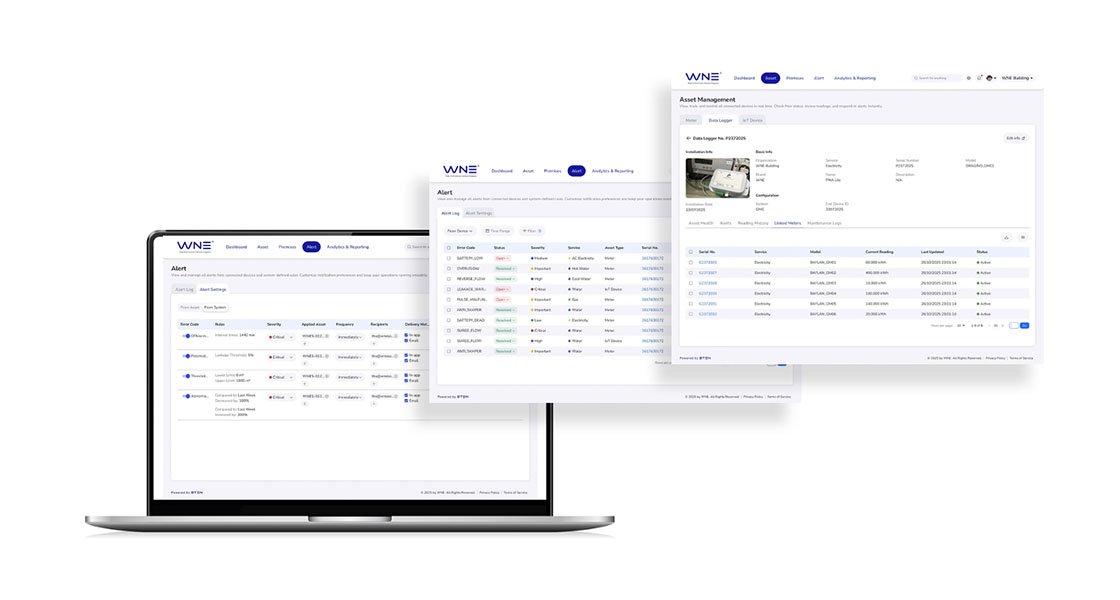
- All meters were connected through the LoRaWAN network to the 8TEN Meter Data Management System (MDMS), enabling automated tenant allocation, real-time consumption analytics and proactive diagnostic alerts for events such as leakages and unchanged meter index readings.
Benefits
Why LoRaWAN for Multi-Tenant Building Metering
Dense vertical buildings present some of the most demanding environments for IoT connectivity. Reinforced concrete, steel framing and stacked floor plates rapidly attenuate wireless signals, while the density of metering points per square meter makes per-device cellular subscriptions economically prohibitive. LoRaWAN’s combination of deep indoor penetration, low power consumption and high device density per gateway makes it uniquely well suited to multi-tenant residential, commercial and mixed-use buildings.
For property managers and system integrators evaluating wireless options for utility metering retrofits, several considerations stand out:
- Coverage and penetration:
The technology must deliver reliable connectivity from rooftop to basement, including elevator shafts, utility risers and meter rooms. - Retrofit-friendly architecture:
Solutions should work with existing meter infrastructure where possible to avoid costly replacements and resident disruption. - Multi-protocol flexibility:
A universal bridge approach allows a single platform to support diverse meter models and brands, eliminating vendor lock-in. - Operational scalability:
The chosen network must support hundreds of endpoints per gateway with low ongoing operating costs. - Platform integration:
A meter data management system that automates tenant allocation, billing and diagnostics is essential to realizing full operational ROI.
LoRaWAN Smart Metering: From Utility-Scale to Building Level
The collaboration between WNE, Lancaster Serviced Apartments and Semtech demonstrates how LoRa® devices and the LoRaWAN® standard enable system integrators to bring complete, cost-effective utility transformation to dense urban properties. WNE’s PIKA IoT Universal Bridge, built on Semtech’s LoRa technology, turns the long-standing challenge of high-rise metering into a plug-and-play digital deployment—extending the proven benefits of LoRaWAN-based smart metering from utility-scale rollouts to the building level.
The Results: 99.9% Reliability, 90% Less Manual Work, Full Building Coverage
By selecting LoRaWAN and deploying its PIKA IoT Universal Bridge, WNE delivered the following outcomes for Lancaster Serviced Apartments:
- Unmatched reliability: A 99.9% data transmission success rate across 315 utility endpoints proved LoRaWAN’s stability for dual-utility (water and electricity) monitoring in dense, vertical environments.
- Massive efficiency gains: A previously manual workflow was replaced with a fewclick automated process, delivering a 90% reduction in manual workload while achieving 100% data accuracy in tenant invoicing.
- Proactive anomaly detection: The system generates real-time alerts for “Meter Index Unchanged” events and potential leakages, allowing management to address issues immediately rather than at the end of each billing cycle.
- Enhanced transparency: Timestamped data logs are accessible to both building management and tenants, fostering trust and clarity around utility allocation.
- Streamlined infrastructure: Coverage of the entire 20-story concrete complex with only 4 indoor gateways and 30 PIKA bridges minimized hardware investment and accelerated deployment.
- Quick ROI: The combination of low deployment cost, retrofit compatibility and reduced operating overhead delivered rapid payback for the building’s owners.